


Gene therapy for OTOF-related deafness: follow-up extending to 2.5 years
A multicentre study follows 42 patients with a specific inherited form of deafness.
A genetic approach to hearing restoration
A multicentre study led by Professor Yilai Shu at Fudan University’s Eye & ENT Hospital was published online in Nature on 22 April 2026. It investigated gene therapy for congenital deafness associated with OTOF mutations, with follow-up extending to 2.5 years. The study included 42 patients aged nine months to 32 years across seven major hospitals, including Peking Union Medical College Hospital and West China Hospital.
OTOF-related deafness disrupts the transmission of sound signals from inner-ear sensory cells to the auditory nerve. It is a specific genetic condition, rather than a description of all congenital hearing loss. The team’s earlier trials began in 2022, with findings published in The Lancet and Nature Medicine in 2024.
Hearing outcomes across age groups
The hospital reported an overall response rate of approximately 90%. Among patients assessed at the longest follow-up, mean auditory brainstem response thresholds improved from above 97 dB nHL before treatment to 42 dB nHL; auditory steady-state response thresholds changed from above 96 to 44 dB nHL, and behavioural hearing thresholds from above 96 to 37 dB HL. A lower hearing threshold indicates the ability to detect quieter sounds.
Among responders followed for 2.5 years, the report stated that all could hear normal conversation, 57% could detect quiet background sounds and 43% could hear whispers. These observations apply to that follow-up subgroup, not necessarily all 42 participants.
Two of three participants over 20 showed hearing improvement. A 32-year-old had a 27 dB nHL improvement in the auditory brainstem response threshold after one year; a 20-year-old improved by 20 dB nHL at 13 weeks.
Factors associated with response
The investigators identified age, baseline distortion-product otoacoustic emissions and mutation type as factors associated with outcomes. Younger participants generally benefited more. Detectable emissions at more frequencies before treatment were associated with better hearing recovery. Mutation type was associated with the degree of improvement on behavioural testing.
Speech abilities, including recognition in noisy surroundings, continued to develop as hearing improved. The hospital reported no dose-limiting toxicity or serious adverse events in the study population during the reported follow-up.
Delivery and further research
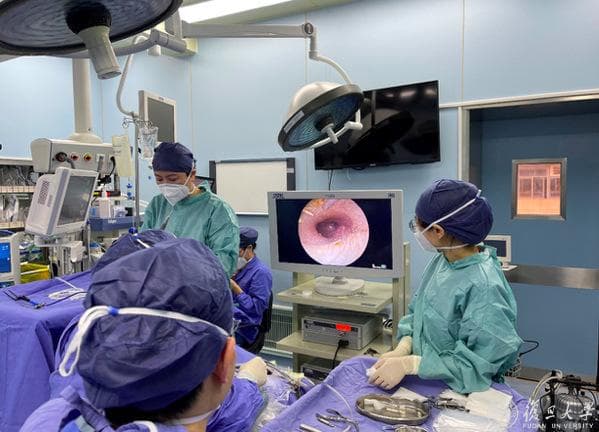
Because the OTOF gene is too large for a single AAV vector, the treatment uses two vectors to deliver its components and restore functional expression in the cochlea. This is gene supplementation; it should not be confused with directly editing the patient’s original DNA mutation. Delivery requires a specialised minimally invasive ear procedure.
The team also worked with 46 experts from six countries on an international consensus for congenital-deafness gene therapy. Further research is intended to address other genetic forms of deafness and sensory disorders. The reported results concern OTOF-related disease in a clinical study; they do not establish a treatment for every cause of hearing loss.