


NEO brain–computer interface approved in China for assisted hand grasping
An implanted system translates brain signals into pneumatic-glove assistance for eligible people with cervical spinal cord injury.
From research to an approved device
China’s National Medical Products Administration has approved the implantable brain–computer interface system developed by Neuracle Medical Technology (Shanghai). The report describes NEO as the first invasive brain–computer interface medical device to reach regulatory approval worldwide.
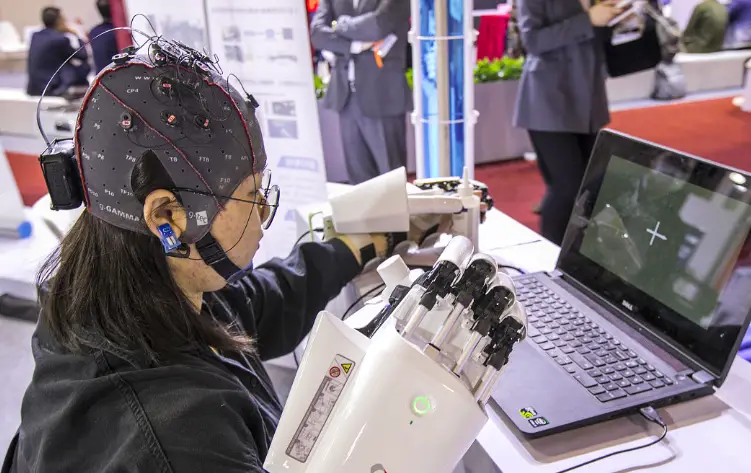
The system combines an implant, implanted electrodes, a brain-signal transceiver, a pneumatic glove, surgical instruments, decoding software and clinical-management software. Its intended function is to compensate for impaired hand grasping in selected patients with tetraplegia caused by cervical spinal cord injury.
Who the approved system is designed for
Patients must be aged 18–60, with C2–C6 cervical spinal cord injury graded A–C. The injury must have been diagnosed more than a year earlier, with the condition stable for at least six months after standard treatment. Candidates cannot grasp with the hand but retain some upper-arm function.
These criteria concern assisted hand function. Approval does not mean that the device repairs the spinal cord, cures paralysis or restores walking.
How the technology works
NEO uses an epidural implant: a coin-sized device sits in a small recess in the skull, while electrodes are placed outside the dura rather than directly in brain tissue. Decoded signals associated with intended hand movement control the pneumatic glove. Near-field wireless power and communication avoid the need for an implanted battery.
The first implant was performed at Xuanwu Hospital in October 2023. Feasibility work subsequently involved Beijing Tiantan Hospital, Huashan Hospital and Jiangsu Province Hospital. The device entered China’s special review pathway for innovative medical devices in August 2024.
Clinical development and next steps
A multicentre registration trial began in May 2025. According to the report, 32 implants were completed at 11 hospitals in 78 days, followed by at least six months of rehabilitation. The accumulated implant follow-up was nearly 8,000 participant-days, with no device-related adverse reactions reported and all participants meeting the principal endpoint.
At three months, the reported response rate for BCI-assisted grasping was 100%. The mean Action Research Arm Test score increased by 9.06 points with assistance; the combined score for both hands without the device increased by 12.56 points. These are reported trial observations in the enrolled population.
The company plans to expand hospital access, standardise rehabilitation workflows and improve manufacturing and supply. Proposed future work in stroke and refractory epilepsy represents development plans, not additional approved indications.