


Precision Radiotherapy
Image-guided treatment planning to concentrate radiation on a tumour while limiting normal-tissue exposure.
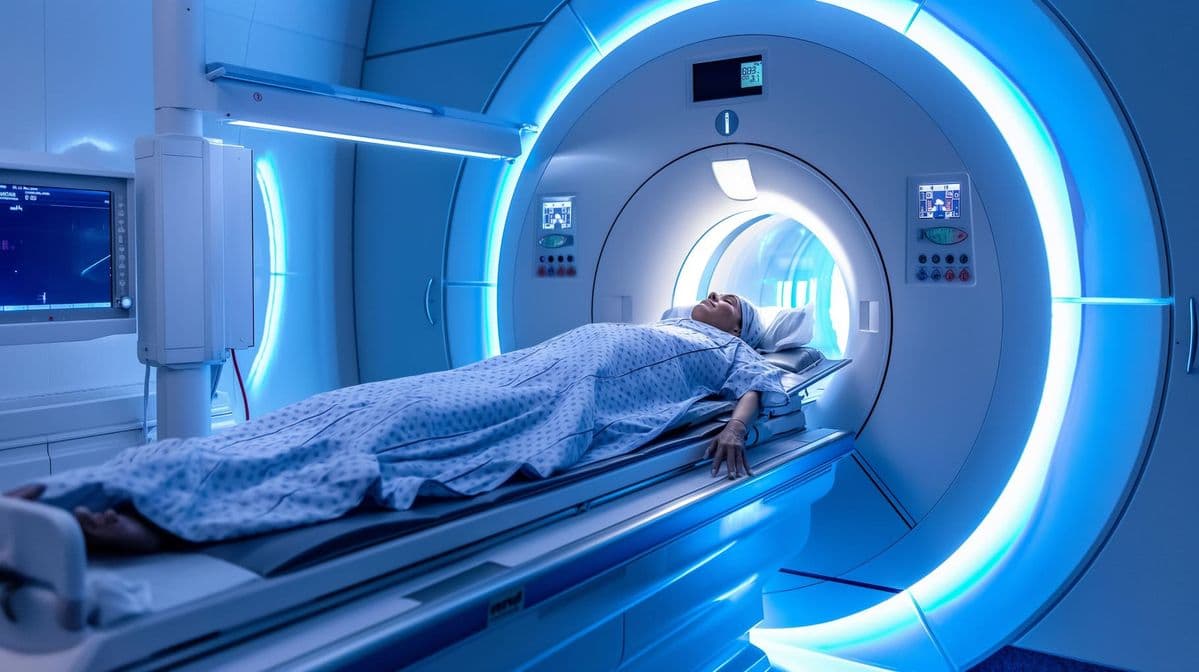
How the treatment works
Precision radiotherapy combines imaging, individualised dose planning and position correction during treatment. It includes photon techniques such as intensity-modulated and stereotactic radiotherapy, as well as proton and heavy-ion therapy. No single technology is best for every case. Tumour location, movement and a comparison of dose plans help establish the likely advantages.
Shanghai’s proton technology
China has domestic proton-system development and clinical capacity. Ruijin Hospital, the Chinese Academy of Sciences and collaborating organisations developed a proton system with a 360-degree rotating beam. It received approval in May 2026 and treated its first patients that month.
The system combines spot scanning, cone-beam CT guidance and respiratory gating. Rotation offers more beam directions, while image guidance and gating help address positioning and breathing-related movement. This is an equipment development that has entered patient treatment.
Comparing treatment plans
Shanghai Proton and Heavy Ion Center provides proton and heavy-ion treatment alongside clinical research and technology development. Together with Ruijin Hospital’s domestic platform, Shanghai offers different particle-therapy pathways.
For tumours near critical structures, teams must still compare the expected benefits of photon and particle plans. Careful dose planning and clinical experience matter alongside the equipment itself.
Cost context
Information published by China’s National Healthcare Security Administration in April 2026 described government-guided full-course charges of around RMB 170,000 for proton radiotherapy and below RMB 200,000 for heavy-ion treatment. Ruijin Hospital had previously announced a RMB 170,000 cap for a proton course for the same indication.
“Full course” refers to the radiotherapy charging category. It does not automatically include every admission, investigation, medicine or international-patient service. Current hospital charges and included items require confirmation before care.
Sources & References
- Chinese Academy of Sciences · rotating-beam proton system (18 May 2026)
- National Healthcare Security Administration · radiotherapy prices (23 April 2026)
- Shanghai Jiao Tong University School of Medicine · Ruijin proton programme (28 November 2023)
- Shanghai Proton and Heavy Ion Center · institutional profile (25 March 2025)