


Intervention and Ablation
Image-guided or electrophysiology-guided procedures for selected local treatment goals.
How the treatments work
Interventional procedures use imaging or electrophysiological guidance to reach a target through blood vessels, natural openings or small punctures. They may reopen vessels, block blood supply, repair structures or deliver local treatment. Ablation destroys selected tissue using heat, freezing or pulsed electric fields.
These methods can be used in cancer, arrhythmias and certain structural conditions. The procedure and its goal differ with the disease.
Pulsed-field ablation for atrial fibrillation
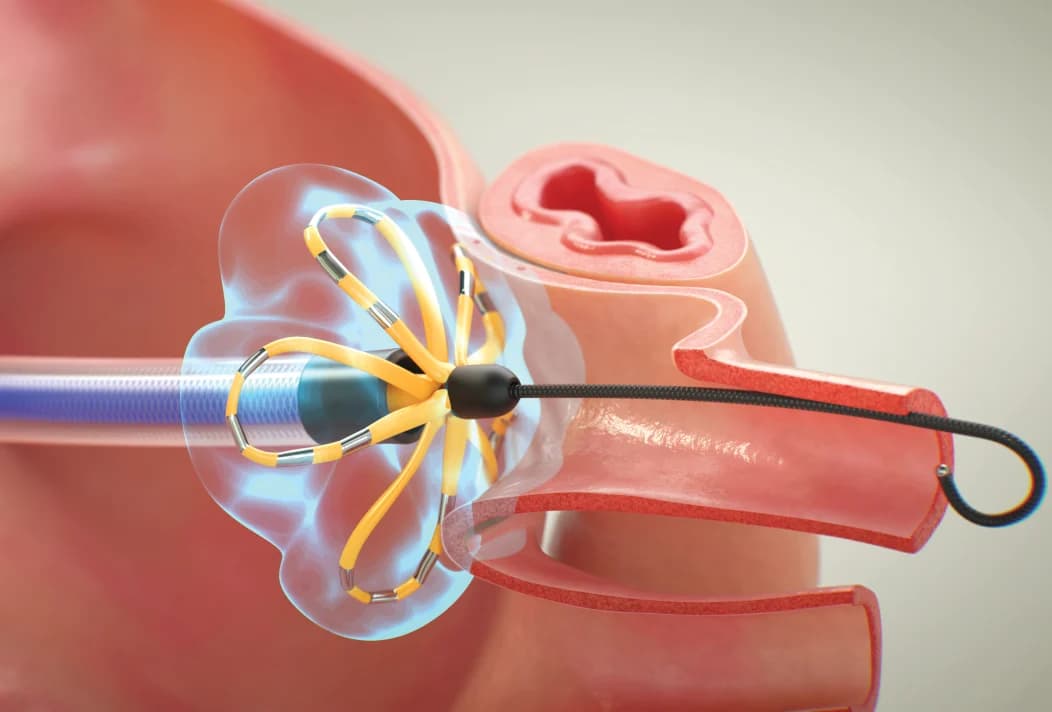
A recent Shanghai development is pulsed-field ablation (PFA) for atrial fibrillation. Short electrical pulses produce irreversible electroporation in target cells, a mechanism different from heat-based radiofrequency ablation. Professor Xu Liu’s team at Shanghai Chest Hospital has explored PFA and intracardiac-ultrasound-guided approaches.
In November 2025, a Shanghai-developed cardiac PFA catheter with pressure monitoring received marketing approval. It illustrates the connection between clinical work and local device innovation.
Local treatment of tumours
Image-guided tumour ablation is another important application. Centres including Zhongshan Hospital, Fudan University, perform tumour ablation and investigate approaches such as irreversible electroporation.
Selection depends on a lesion’s location, size, number and proximity to other organs. Ablation may be combined with medicines, surgery or other local treatments. The descriptions “minimally invasive” and “new technology” do not, by themselves, establish that a procedure is appropriate for a particular patient.