


Immunotherapy
Treatments that act on immune pathways rather than simply “boosting immunity”.
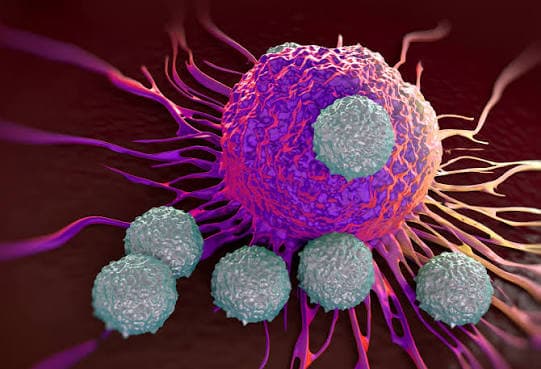
How the treatment works
Immunotherapy modifies the immune system to treat disease. In oncology, PD-1 and PD-L1 checkpoint inhibitors can release signals that suppress T-cell activity, helping the immune system recognise and attack cancer. Newer bispecific antibodies engage two targets, for example combining immune modulation with inhibition of tumour blood-vessel formation.
Immunotherapy is not simply a way to strengthen immunity. Different mechanisms have different clinical uses and patient-selection requirements.
Chinese clinical research
China’s immunotherapy landscape combines locally developed medicines, combination regimens and large clinical studies. One Shanghai-led example is HARMONi-2, led by Professor Caicun Zhou’s team. It compared the PD-1/VEGF bispecific antibody ivonescimab with pembrolizumab as first-line treatment in a defined advanced non-small-cell lung cancer population.
Results were published in The Lancet in 2025. The relevant Chinese indication extends to eligible patients with PD-L1-positive, EGFR/ALK-negative advanced non-small-cell lung cancer.
Combination therapy and individual selection
HARMONi-6, led by Professor Shun Lu’s team at Shanghai Chest Hospital, compared ivonescimab plus chemotherapy with tislelizumab plus chemotherapy in advanced squamous non-small-cell lung cancer, with findings announced in 2025.
These studies inform the development of immune-based combinations. Actual treatment choice still depends on cancer type, driver alterations, PD-L1 expression and previous therapy, alongside monitoring for immune-related adverse effects.