


01
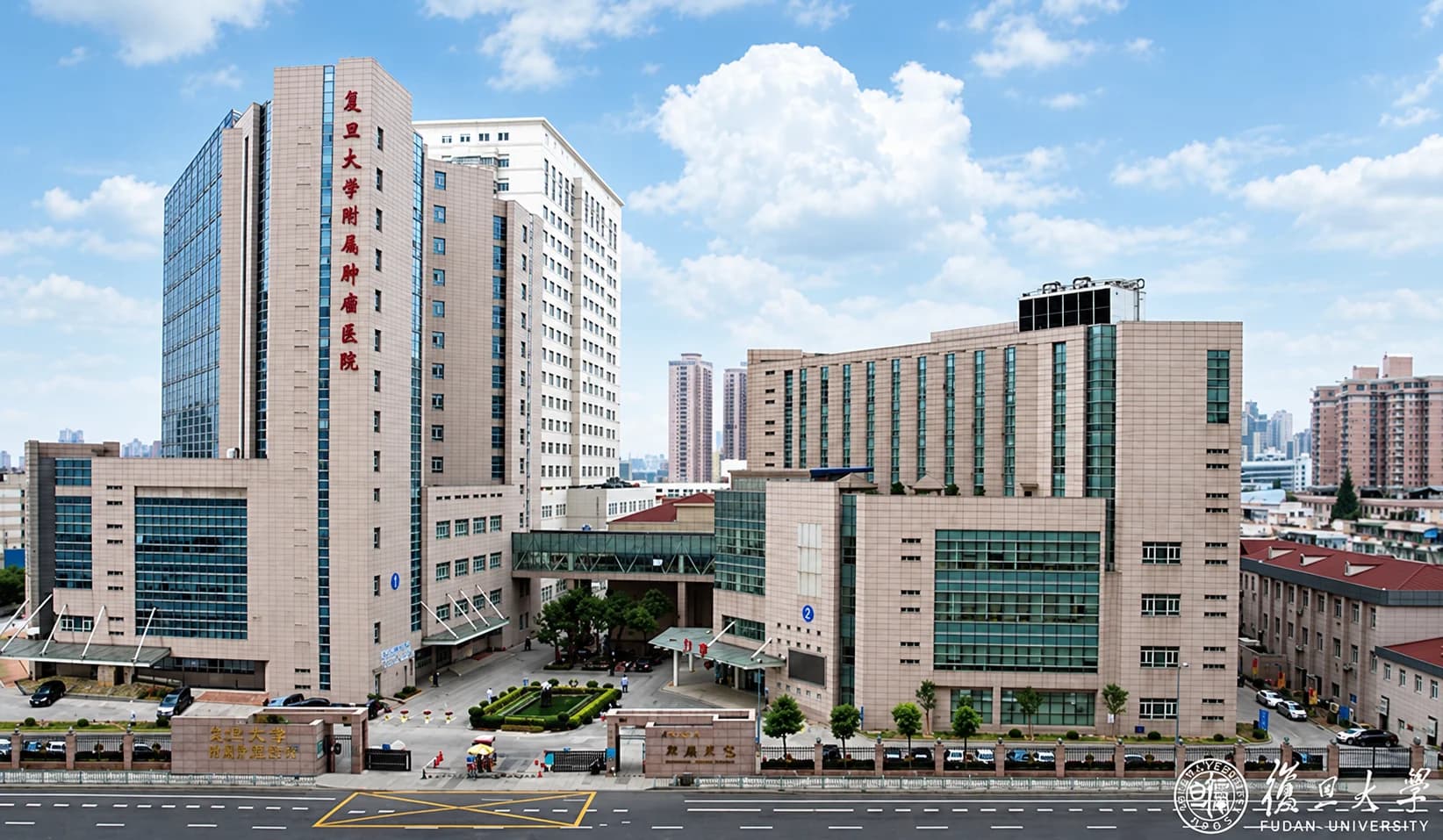
A closer look at the hospital
A hospital-reported five-year survival of 72% across cancers, 80,000 operations and 420,000 radiotherapy attendances in 2025 put the scale of Fudan University Shanghai Cancer Center into perspective. Founded in 1931, this specialist cancer hospital brings together surgery, systemic therapy, radiotherapy and pathology through dedicated breast, gynecologic, digestive, thoracic and urologic cancer teams.
Its official profile, current to the end of 2025, lists 2,177 open beds across Xuhui and Pudong, 2.5 million outpatient visits and 170,000 admissions in 2025. The center also initiated 695 clinical studies that year, supporting both established treatment and research options selected by cancer type, molecular findings and treatment history.
Cancer-specific results add useful detail: in 2021, the hospital reported breast cancer overall survival of 93.6% at five years and 82.6% at ten years. This breast cancer population differs from the all-cancer population behind the 72% figure. Stage and subtype remain essential when relating these institutional results to an individual patient.
Pathology review, dedicated multidisciplinary clinics and wards, precision radiotherapy and function-preserving surgery connect this expertise to treatment decisions. The hospital has MRI-guided radiotherapy facilities and an integrated relationship with Shanghai Proton and Heavy Ion Center. These resources support specialist assessment for initial treatment, recurrence and organ preservation.
02
Clinical strengths
Breast cancer: long-term outcomes and subtype-directed care
Breast surgery, medical oncology, radiotherapy and molecular diagnosis work across the treatment course. Early disease raises questions about cure, breast conservation and reconstruction; recurrent disease requires treatment matched to hormone receptors, HER2 and other molecular features. The long-term survival figures above come from the hospital’s breast cancer follow-up reporting.
Triple-negative breast cancer is a particular research strength. Zhimin Shao, Yizhou Jiang and colleagues developed the FUTURE program to match molecular subtypes with treatment combinations. This offers a specific specialist direction for patients seeking further options after standard treatment.
Gynecologic oncology: ovarian, cervical and endometrial cancer
Gynecologic oncology is a major strength at Fudan Shanghai Cancer Center. Xiaohua Wu and the gynecologic oncology team work across ovarian, cervical and endometrial cancer. Their ovarian cancer program brings together assessment of resectability, complex cytoreductive surgery, systemic treatment and care after recurrence. For disease involving several areas of the abdomen and pelvis, this experience helps inform both the extent and timing of surgery.
The team has also developed hereditary cancer counseling, BRCA-related testing and research into maintenance treatment. In cervical cancer, its work includes fertility-preserving surgery for carefully selected younger patients. Surgical planning therefore sits alongside longer-term questions about recurrence, inherited risk and quality of life.
Pancreatic cancer: assessing timing as well as operability
The pancreatic team works across surgery, perioperative care and translational research. A useful assessment considers more than whether a tumour appears removable: vascular involvement, spread, fitness and response to systemic treatment all inform the sequence of care.
For patients seeking reassessment after treatment, or advice following recurrence, scans from several time points and a clear treatment history help the team understand what has changed and what the next step should aim to achieve.
Hepatobiliary cancer and liver metastases
Lu Wang and the liver surgery team treat primary liver cancer, intrahepatic and hilar cholangiocarcinoma, gallbladder cancer and liver metastases. Their work includes laparoscopic and complex liver resection and selected local treatments, with input from other oncology specialties.
Colorectal liver metastases require coordination of treatment for the primary and hepatic disease. Previously treated cases also need assessment of remaining liver function and further treatment options.
Colorectal cancer: dedicated surgery and combined treatment
The colorectal program includes dedicated surgical and combined-treatment services. Sanjun Cai, Xinxiang Li and colleagues have helped develop standardized colorectal surgery and multidisciplinary care. Surgical teams work with radiotherapy, medical oncology, liver surgery and interventional specialists on complex cases.
This structure is particularly relevant to locally advanced rectal cancer, reassessment after initial treatment and colorectal cancer with liver involvement. Decisions address treatment sequence, local and systemic disease control, bowel function and stoma care.
Gastric cancer and gastrointestinal stromal tumors
The gastric surgery service treats gastric cancer and gastrointestinal stromal tumors using open, laparoscopic and robot-assisted approaches. Yanong Wang, Hua Huang and colleagues contribute to the gastric cancer program and its multidisciplinary work. The service also describes function-preserving procedures for selected early lesions.
Planning considers oncologic resection and lymph node management together with eating, nutrition and weight after surgery. Patients who have already received systemic treatment may need reassessment of imaging response and fitness before a surgical decision.
Thoracic oncology: lung and esophageal cancer
Thoracic surgery is an important part of the center’s cancer services. Haiquan Chen and colleagues treat lung, esophageal and other thoracic tumors through surgery and combined treatment. Their clinical work includes early lung cancer assessment, minimally invasive surgery and individualized decisions about the extent of resection.
Imaging, pathology, stage and lung function inform the surgical plan. When several treatments are needed, medical oncology and radiotherapy help define the sequence of care before or after surgery, or an appropriate nonsurgical approach.
Urologic cancers: cancer control and function
The urologic programme covers surgery and combined treatment for cancers including prostate, kidney and bladder cancer. The hospital describes Professor Dingwei Ye’s extensive work in this field and a multidisciplinary approach to care.
Urinary function, kidney function and recovery matter alongside cancer control. Patients can bring these priorities into the consultation so the team can explain the choices and trade-offs that apply to their case.
Head and neck tumors, including thyroid cancer
The head and neck service has decades of experience in thyroid and other head and neck tumors, combining specialized surgery with multidisciplinary care. Yu Wang’s team has developed multicenter research in medullary thyroid cancer and contributed to international work on tumor staging.
Histologic subtype, cervical lymph nodes, previous operations and voice changes all matter in thyroid cancer assessment. Treatment in this tightly packed anatomical region must account for important structures, including the recurrent laryngeal nerves, as well as local cancer control and postoperative function.
Bone and soft tissue tumors and melanoma
The bone and soft tissue service covers soft tissue sarcoma, primary bone tumors, bone metastases and melanoma, with access to the center’s spine tumor and melanoma programs. Accurate pathology and careful planning of surgical margins are central to this work.
Recurrent sarcoma or disease close to critical organs may require discussion of surgery alongside systemic treatment and radiotherapy. Specialist pathology and imaging help establish the diagnosis and extent of disease before treatment.
Lymphoma: classification, systemic therapy and cellular treatment assessment
The dedicated lymphoma service includes Dongmei Ji and colleagues, who treat lymphoma and assess relapsed or refractory disease. Pathology, imaging, nuclear medicine and radiotherapy contribute to classification and planning. The hospital has also reported clinical use of CAR-T therapy for lymphoma.
Accurate subtype review can change treatment choices. Cellular therapy requires assessment of disease status, previous treatment, physical condition and eligibility before arrangements are confirmed.
Medical oncology and cancers of unknown primary
Medical oncology supports systemic treatment and clinical research across cancer types, including breast and digestive cancers and complex metastatic disease. Xichun Hu and Zhiguo Luo’s team has conducted prospective randomized research in cancer of unknown primary, examining how molecular diagnosis can inform treatment selection.
Joint review by oncology, pathology and imaging specialists is particularly valuable when the primary site remains uncertain or several lines of treatment have already been used. Access to a clinical study depends on the active protocol and individual eligibility.
Pathology and radiotherapy: connecting diagnosis with treatment
Specialist pathology, imaging and radiotherapy support the hospital’s cancer programmes. A pathology review can help clarify the basis of a diagnosis; radiation planning needs to account for surgery, systemic therapy and any previous radiation exposure.
Bring pathology reports and available slides or blocks, and previous radiation plans and dose records where applicable. The receiving team will advise whether existing material is sufficient or further sampling is needed.
03
Specialists & clinical teams
Zhimin Shao, Yizhou Jiang and the breast cancer team
Subtype-guided treatment for triple-negative breast cancer
Shao and Jiang were corresponding authors of FUTURE-SUPER, a randomized phase II study in 139 patients with recurrent or metastatic triple-negative breast cancer. Matching treatment to molecular subtype achieved median progression-free survival of 11.3 months versus 5.8 with the control regimen. The team is particularly relevant when molecular findings could inform treatment or trial options; this strategy still needs larger confirmatory studies.
View supporting sourceXiaohua Wu
Recurrent ovarian cancer and fertility-sparing cervical surgery
Wu was first author of the 265-patient phase III NORA trial. After a response to platinum chemotherapy for recurrent ovarian cancer, median progression-free survival was 18.3 months with niraparib maintenance versus 5.4 with placebo. His team also published a 333-patient study of fertility-sparing surgery for early cervical cancer. These are two distinct strengths: treatment after ovarian cancer relapse and assessing whether fertility preservation is appropriate.
View supporting sourceXianjun Yu
Surgical extent and treatment planning for pancreatic cancer
Yu helped design and perform a 400-patient multicenter randomized trial comparing standard and extended pancreatoduodenectomy. Extended surgery improved disease-free survival but did not significantly improve overall survival. This work addresses a practical surgical decision: how much tissue to remove, balancing recurrence control against the burden of a larger operation.
View supporting sourceDingwei Ye
Treatment intensification for metastatic prostate cancer
Ye led CHART, a phase III trial in 654 men with high-volume metastatic hormone-sensitive prostate cancer, evaluating rezvilutamide with androgen-deprivation therapy. Published in The Lancet Oncology, the study supports his focus on treatment intensification for metastatic disease. The patient’s fitness, age and other medical conditions remain central to choosing a regimen.
View supporting sourceHaiquan Chen
Early lung cancer: tailoring the extent of surgery
Chen’s team studies how much surgery selected early lung cancers require. A 2025 multicenter randomized trial reported no lymph-node metastases in an interim analysis of 302 carefully selected patients with ground-glass-dominant adenocarcinoma, while comparing the burden of omitting mediastinal node dissection. This work is relevant to reducing unnecessary dissection in suitable early tumors, rather than to all nodules or solid lung cancers.
View supporting sourceZhen Zhang and Xinxiang Li
Organ preservation in low rectal cancer
Zhang and Li collaborated on TORCH-E, investigating rectal preservation after radiotherapy, chemotherapy and immunotherapy. The 33-patient single-arm phase II study, published in 2025, reported an organ-preservation rate of 60.6%. This is relevant to selected patients concerned about rectal removal and a permanent stoma; the approach remains exploratory and requires careful selection and close surveillance.
View supporting sourceYu Wang
Multidisciplinary care for aggressive thyroid cancer
Wang was a corresponding author of a 2025 cohort study of 95 patients with poorly differentiated or anaplastic thyroid cancer. It examined personalized care combining molecular testing, systemic treatment and reassessment for surgery. This is particularly relevant to rapidly growing, locally invasive thyroid tumors, where identifying an actionable target and establishing resectability are urgent decisions.
View supporting sourceXichun Hu and Zhiguo Luo
Cancer of unknown primary
Hu and Luo were corresponding authors of the randomized Fudan CUP-001 trial, which used a 90-gene expression test to predict a cancer’s tissue of origin and compared site-specific treatment with empirical chemotherapy. Their distinctive focus is the patient with metastatic cancer whose primary site remains unknown after standard investigations: connecting pathology review, molecular testing and a treatment decision.
View supporting sourceWangjun Yan and the soft-tissue sarcoma team
Surgery and postoperative treatment for high-risk soft-tissue sarcoma
Yan’s team studies whether treatment after complete resection can reduce relapse in high-grade soft-tissue sarcoma. At ASCO 2024 it reported interim findings from a randomized phase II trial of anlotinib versus placebo. This focus is relevant when weighing further treatment after surgery, according to sarcoma subtype and recurrence risk; interim conference findings do not establish a new standard of care.
View supporting sourceStudy results describe selected patient groups, not an individual doctor’s success rate. Availability, case acceptance and the treating team require hospital confirmation.
04
Your international care journey
Start with a dated clinical summary and a clear purpose for the visit: a first treatment plan, pathology review, surgical assessment or advice after recurrence. Use a hospital-confirmed intake channel to establish the specialty, consultation format and campus. Ask about multidisciplinary review, pathology transfer and language support before travel, and confirm material requirements, fees and scheduling. Availability of a named specialist or an initial remote records review must be confirmed by the hospital.
Share your records and questions
Send the diagnosis, pathology, imaging and treatment history. Explain whether you want a second opinion, information about a treatment or an in-person visit. We help organise the records and identify missing information.
Confirm the specialty and acceptance
The relevant service confirms whether it can accept the case and whether pathology review or more records are needed. The hospital determines whether remote assessment or a multidisciplinary opinion is appropriate.
Agree appointments, costs and travel
Confirm the campus, first appointment, proposed assessment and payment requirements before arranging visas, accommodation, transport and interpreting. Discuss caregivers and length of stay when repeated treatment is expected.
Attend assessment and discuss the plan
The clinicians assess the case, arrange necessary tests and explain suitable options, expected benefits and risks. Discuss costs and logistics alongside the clinical plan before deciding on the next step.
Stay informed during treatment
Agreed support can include appointments, interpreting and communication during care. Keep track of questions and clinical feedback, and review schedules, costs and family arrangements if the treatment plan changes.
Return home with a follow-up plan
Before departure, collect the discharge summary, pathology and imaging, medicines and follow-up plan. Clarify pending reports and contact arrangements, with support for communication between local and treating clinicians where agreed.
What to prepare for the first enquiry
Prepare pathology, existing immunohistochemistry and molecular results, original imaging and a dated treatment history. Gynecologic cases should include surgical or cytoreduction records, previous radiotherapy, existing BRCA results and fertility priorities; breast cases need receptor status. Digestive, hepatobiliary, pancreatic and urologic cases need relevant contrast imaging, endoscopy or operative records. Lymphoma cases should include immunophenotyping and existing PET/CT. Submit available records first so the clinical team can identify any gaps.
Diagnosis & pathology
Diagnosis summary, complete pathology, immunohistochemistry, available molecular tests and where tissue is held.
Original imaging
Recent and pretreatment imaging studies with reports and dates, so changes can be compared.
Treatment timeline
Operations, radiotherapy plans, each drug regimen, responses and major side effects; current medicines and allergies.
Your practical needs
Home country, preferred language, possible travel dates, caregiver needs and the questions you want answered.
Start with the records you already have. We can help identify gaps; do not arrange additional tests solely to make an enquiry.
See the full records checklistPractical details to settle before travel
Costs & payment
Ask what the hospital estimate includes, deposits, additional charges and refund arrangements. Plan travel and living costs separately. Insurance coverage and direct billing require confirmation.
Language & records
Confirm interpreting for appointments, communication during treatment and the language of records. Our China coordination includes Chinese and English support; other languages need advance confirmation of availability and arrangements.
Campus, accommodation & caregivers
Consultations, tests and admission may take place at different sites. Distance, accessibility, caregiver rules and follow-up frequency all affect the itinerary and should be considered once the clinical plan is clearer.
Length of stay & returning home
Assessment, surgery, radiotherapy and cellular treatment have different schedules. Ask the hospital for the expected course, allowing for results and changes in the plan. Confirm readiness to return home with the clinical team.
05
How Chirona can help
From organising records and contacting an appropriate specialty to travel in China and follow-up at home, we help connect the practical steps. Tell us the diagnosis, treatment so far and the question you most want answered.
Make your history easier to review
Organise treatments and key reports, help with necessary translation and bring the important questions to the clinician.
Find the appropriate clinical service
Enquire with the relevant specialty, follow up on record requirements and help clarify acceptance and appointments.
Coordinate the practical steps in China
Within the agreed scope, help with visa documentation, travel, arrival transport, accommodation and accompaniment.
Keep communication connected
Help organise consultation feedback, records for home and follow-up requirements, with continued contact as agreed.
The hospital and clinicians make diagnostic, treatment and acceptance decisions. Chirona provides consultation and care coordination within the agreed scope.
Explore our service process06
Questions before you decide
Which campus should I visit?
Confirm the disease-specific team first, then check where the consultation, investigations and treatment will take place. Choose accommodation after the receiving campus is established.
Can I request a specialist mentioned here?
You can state your preference. The receiving service must confirm current schedules, eligibility and appointments. If an earlier assessment is needed, ask about other clinicians within the same specialist team.
Can I request one of the specialists featured here?
Tell us your preference and we can help enquire. The hospital confirms acceptance, the specialist’s involvement and who provides outpatient or inpatient care. It may also recommend another suitable clinician within the specialty.
Can I contact Chirona before choosing a hospital?
Yes. Share the diagnosis, treatment history and the decision you need help with. We can organise the questions to consider when comparing hospitals and explain the coordination available.
Does submitting records confirm treatment?
Submitting records starts the assessment. The hospital must confirm acceptance and clinical suitability and may require more information or in-person tests. Appointment confirmation, the treatment plan and costs should be clarified separately.
Sources & further reading
Profiles draw on the institutional sources below, including historical material where it explains a programme’s development. Appointments, services and research recruitment can change and need confirmation when enquiring.
- Official hospital profile: 2025 activity, 72% five-year survival and clinical studies
- Multidisciplinary breast cancer platform
- Multidisciplinary clinics at Pudong
- Fudan: oncology faculty and specialties (2026)
- Gynecologic oncology: ovarian cancer program
- Ovarian cancer hereditary risk and BRCA research
- Gynecologic oncology and fertility-preserving surgery
- Colorectal surgery
- Combined colorectal treatment
- Gastric surgery
- Head and neck surgery: Yu Wang team (2025)
- Bone and soft tissue surgery
- Radiotherapy center
- Cancer of unknown primary research (2025)
- Breast cancer digital pathology research (2025)
- Hepatobiliary surgeon Lu Wang
- Lymphoma and CAR-T clinical work
- Hospital specialist clinic listings
- Xiaohua Wu’s team and ovarian cancer imaging research
- Fertility-sparing cervical surgery: retrospective study of 333 patients (BJOG, 2019)
- NORA final overall survival analysis: no statistically significant OS benefit (2024)
- Professor Zhimin Shao and the breast cancer team: institutional background
- Professor Xianjun Yu and the pancreatic cancer team: institutional background
- Professor Dingwei Ye and the urologic cancer team: institutional background
- Haiquan Chen: institutional background
- Breast cancer survival: 93.6% at five years and 82.6% at ten years (hospital report, 2021)
- Zhimin Shao, Yizhou Jiang and the breast cancer team
- Xiaohua Wu
- Xianjun Yu
- Dingwei Ye
- Haiquan Chen
- Zhen Zhang and Xinxiang Li
- Yu Wang
- Xichun Hu and Zhiguo Luo
- Wangjun Yan and the soft-tissue sarcoma team